About this campaign
Victim-survivors of sexual offences and domestic abuse continue to report unfair treatment. We pay attention to how gender bias manifests in the words used in our courtrooms and in the public records, especially by judges. We bring it to light and call it for what it is.
We pay particular attention to family family courts and private law proceedings, which, until recently, have operated without the benefit of public scrutiny. We will shine a light on a crucial aspect of the state’s infrastructure that makes life-changing decisions every day for victim-survivors of gender-based violence and their children.
Our report “Scratching the Surface: Evidence of Victim-Blaming in Family Courts” identifies subtle but pervasive victim-blaming in published family court judgments. It highlights that few judgments are actually published and they are often self-selected by judges, meaning victim-blaming may be far more widespread than we know. The report makes 10 recommendations to improve transparency, accountability, practice and research.
Through our campaign efforts, we aspire to contribute to a justice system and judiciary that is fully representative, accountable, transparent, and equitable. We are committed to upholding democratic principles and the pursuit of equality for all.
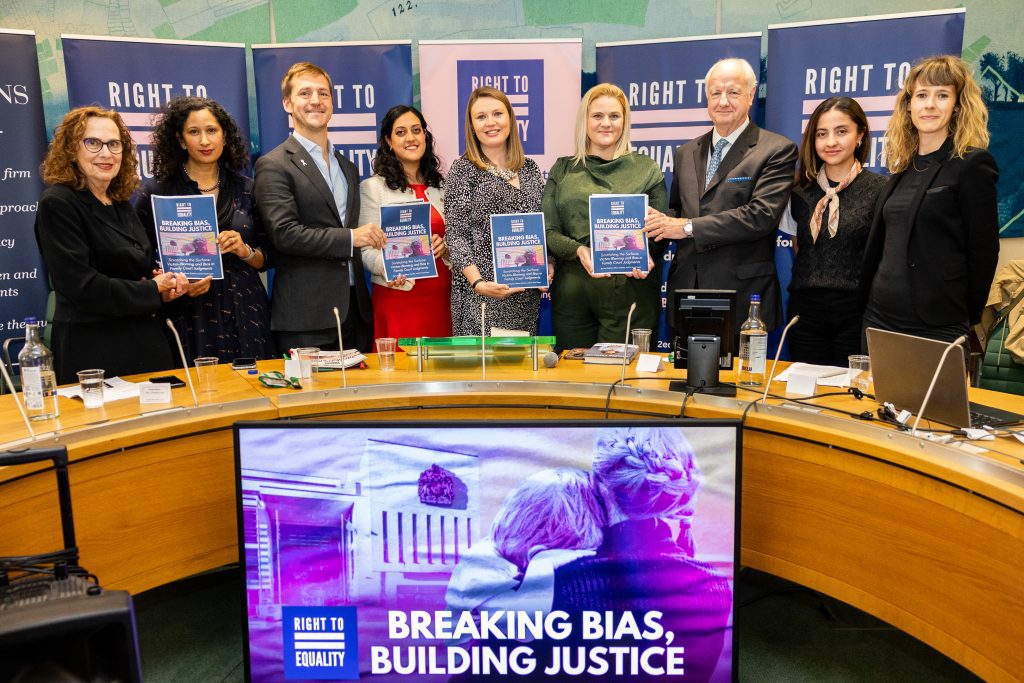
Our report shows
across over 90 published judgements:
72.5% of all judgments contained at least one instance of judicial victim‐blaming.
62.5% of examples were coded as subtle and therefore easily embedded within judicial reasoning.
Discrediting victim‐survivors was the most common form of victim-blaming, followed by behavioural blame and trivialisation.
Victim‐blaming often overlapped with gender bias: mothers’ behaviour was scrutinised intensely while fathers’ was contextualised or minimised.
Our Partners
-
Family of Jazmine, teenage rape survivor in Hampshire case Campaign AmbassadorsJazmine (not her real name) was raped by two boys who were spared custodial sentences by Judge Nicholas Rowland, who used victim-blaming language in this sentencing remarks. Jazmine’s parents joined this campaign as ambassadors.
-
Riverlight Campaign PartnerRiverlight is a non-profit that provides support services and resources to survivors and campaigns for legal change that will give victims greater safety and care.
-
-
You Would you like to write for us?If you are an accredited journalist or legal blogger interested in attending Family Court, Right to Equality is providing financial support to attend court and write about your experience. Email us to learn more.
-

